


Discovering the Rocca of Cefalù: ancient myths, rich history, and breathtaking views
Rising just behind Cefalù’s historic center—beyond the expanse of red-tiled roofs and the imposing silhouette of the Norman Cathedral—is a monumental, 268-meter limestone cliff that commands the entire coastal landscape: the Rocca of Cefalù. While it is impossible to miss, treating it as just another viewpoint would be a mistake. This stone giant is the guardian of a millennia-old tapestry of history, archaeological remains, and timeless legends.
The head of Cefalù and the myth of Daphnis
The connection between the cliff and the town runs deep, starting with its very name. Cefalù derives from the ancient Greek word Kephaloidion (meaning “head”), inspired by the rock’s resemblance to a giant human profile. Several myths have flourished around this striking shape. The most famous legend tells of the shepherd Daphnis, who swore eternal fidelity to a nymph. After being seduced while intoxicated, he was struck blind as a punishment and chose to end his life by throwing himself from the cliff. It is said that Hermes (or Zeus, in other versions) transformed him into stone to save his soul, granting him immortality in the form of this majestic mountain.
The trail: where history meets nature
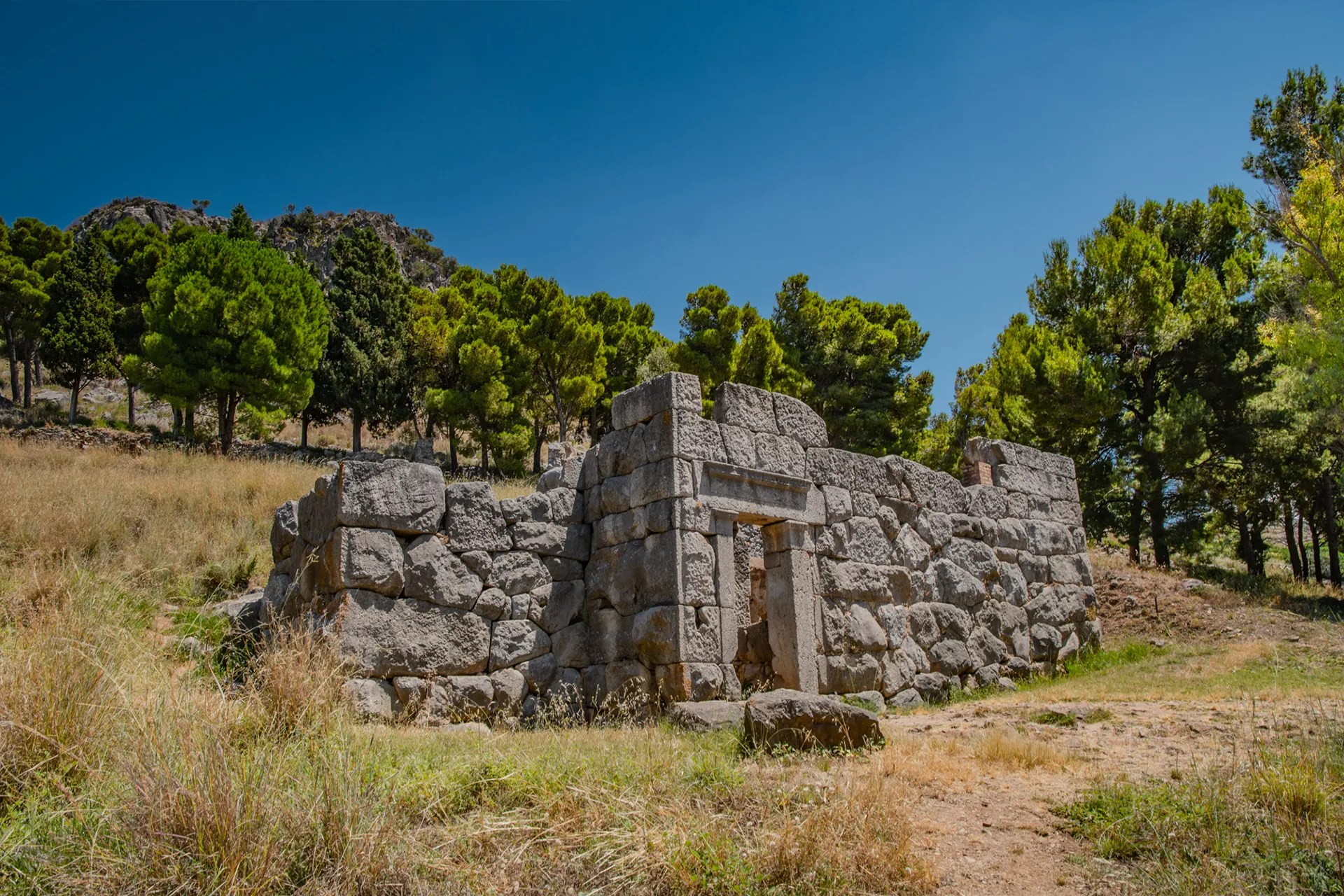
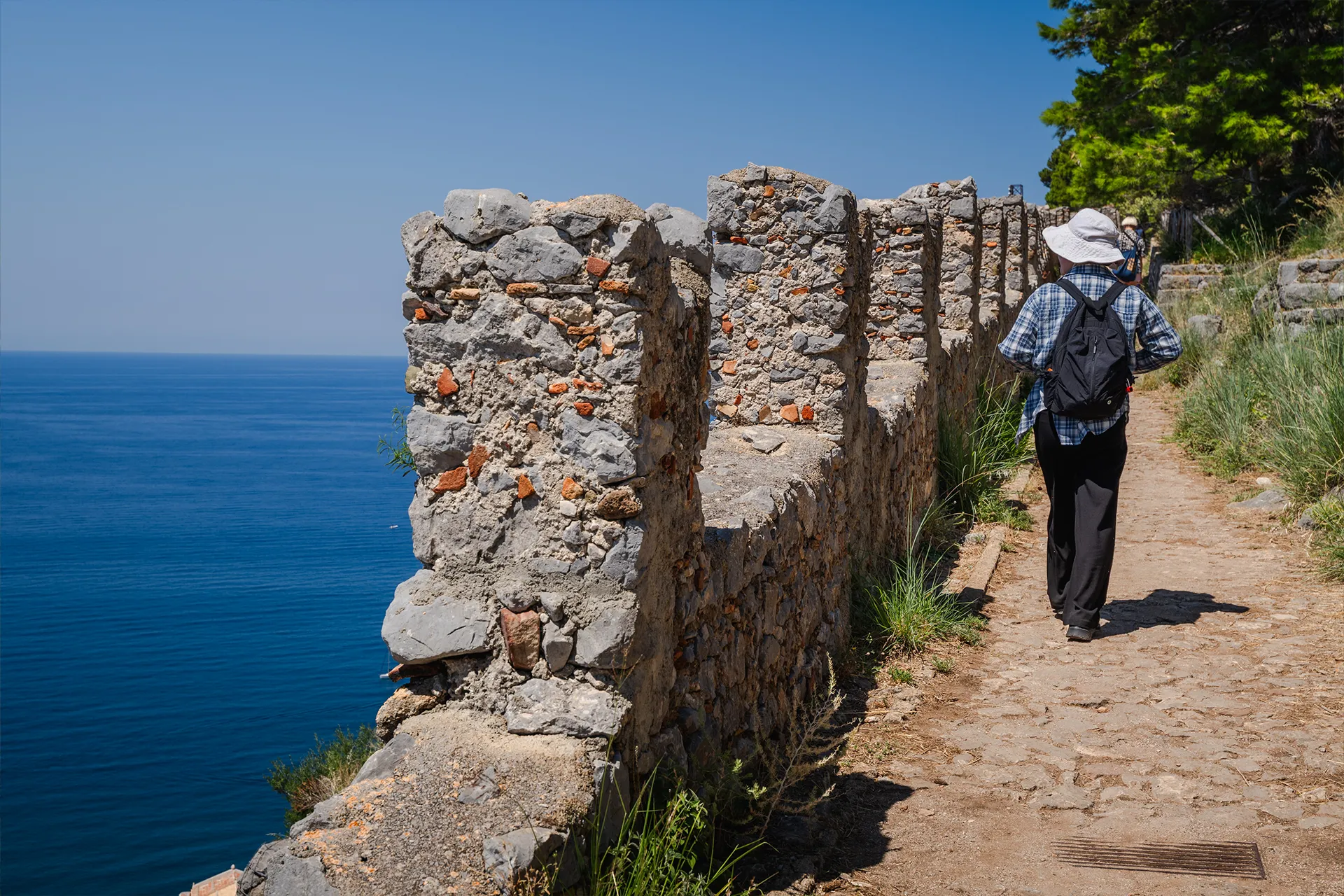
The hike begins right in the heart of the town. Starting from Corso Ruggero, you turn onto Via Saraceni to reach the official footpath. The trail winds through lush Mediterranean scrub, surrounded by low trees, limestone rocks, and fragrant wild shrubs. As you climb, the effort is well rewarded by encounters with remnants of eras long past. Along the way, you will cross the ancient medieval crenellated walls, which were completed in the 15th century. One of the most fascinating and mysterious stops is undoubtedly the Temple of Diana, a pre-Roman megalithic structure originally dedicated to pagan gods and water worship.
Continuing up the steepest and most uneven stretch, you will eventually reach the ruins of the medieval castle (dating back to the 12th–14th centuries), affectionately known by locals in the Sicilian dialect as “u castieddu”. From up here, the 360-degree view is nothing short of incredible: the entire gulf unfolds beneath you, and on a clear day, your gaze can stretch from Capo d’Orlando to the east all the way to the skyline of Palermo to the west.
Essential visitor information
Duration and difficulty: the climb takes about 45 to 60 minutes (expect around two hours for the round trip). The first section up to the Temple of Diana is relatively easy and equipped with stone steps, while the final stretch to the summit becomes steeper and more uneven, bringing the trail to a moderate difficulty level.
What to bring: sturdy walking shoes or hiking boots, plenty of water, and a hat are essential. The trail is largely exposed to the sun, so we highly recommend avoiding the hike during the hottest hours of summer days.
Opening hours: April to October: daily from 9:00 AM to 7:00 PM; November to March: Daily from 9:00 AM to 4:00 PM.
Admission: Tickets cost €5 and can only be purchased on-site.